Showing posts with label Articles. Show all posts

Monday, October 18, 2021

What is meant by DVR shares?

What is meant by DVR shares?

A DVR is an abbreviation of Differential Voting Rights. It is like an ordinary equity share which provides fewer voting rights to the shareholders. As compared to the ordinary equity shares, DVR shares can have a higher or a lower voting right. But as per Indian regulation, companies are not allowed to issue equity shares with higher voting rights, resulting lower voting rights in DVR shares in India when compared to ordinary shares.

The basic difference between DVR shares and Ordinary shares is with respect to voting rights. Also, DVR shares receive higher dividend.

These shares are listed on stock exchange and are traded the same way as ordinary shares are traded, but DVR are mostly traded at a discount.

Tata Motors, Pantaloon retail, Gujarat NRE Coke are some of the Indian companies that have issued differential voting rights shares.

Benefits to the investors on buying DVR Equity Shares:
  • Apart from voting rights, a shareholder will get all other rights intact such as bonus shares, right share issue, etc.
  • DVR shares are usually offered at a discount when compared to ordinary shares, therefore less investment amount is required.
  • Generally higher dividend is paid in DVR shares than in regular equity shares.
Why companies issue DVR shares?

Currently there are very few companies who have issued DVR shares. Now, let us see the advantages to the companies who issue DVR shares:
  • By issuing DVR shares, company can decide on how much of its powers to dilute, also the company can retain control and raise money.
  • The company can choose on how much voting rights to be given to each shareholder and what kind of shares to issue.
  • It provides safeguard against hostile takeover as when equity shares are issued with voting rights, there can be a chance that investor can hold majority and takeover the control of company’s management.
Who should invest in these shares?

DVR shares offer a variation to both the investors i.e. retail investor and the institutional investor, particularly those who may not be certain about voting rights but may see the economic values in the form of high discount offer which is being made and DVR shareholders get incremental dividend.

Why retail investors should make investment?

Ideally DVR shares are good instrument for long term investors, particularly those investors who are not necessarily interested in taking a voting position but who seek higher dividend. Though, like ordinary shares DVR shares are also listed in the same way. But, DVR shares are traded at a discount as these provide few voting powers to the shareholders. Due to price differentiation of DVR shares and normal shares investors can take advantage.

Why in India DVR shares not very much popular ?

DVR share is an extremely great investing tool. For retail investor who do not attend and vote in AGMs, it is a good way to earn higher dividends as one can get DVRs at a steep discount. But, till today in India DVR shares have not yet gone in a big way as:
  • In DVR shares the liquidity is an issue as institutions are not keen to participate.
  • As per SEBI, DVR shareholders are not permitted to receive higher dividend than ordinary shareholders. If we see in case of DVR share issue, the dividend differential is hardly attractive which does not lead the investor to get excited about it. This is also one of the major reasons why DVRs have not really taken off in a big way in India.
  • Also, without voting rights, the institutional investors are by default not willing to invest in equity.
TATA Motor DVR: 

Now lets talk about TATA motor DVR. 

Reason 1 to buy TATA Motor DVR: 

Current market Price (CMP ) of TATA Motor is Rs 509.60 (As on 18-10-2021, Closing)

CMP of TATA Motor DVR is Rs 269.75 (As on 18-10-2021, Closing)

In TATA Motor Case actual Price of DVR should be around Rs 339.733, hence right now TATA Motor DVR is trading at discount. This may act as first reason to buy this stock. 

Reason 2 to buy TATA Motor DVR: 

Trend of this is bullish i.e trading above all moving averages, with RSI above 80, though RSI above 80 is not sustainable hence investment in this stock can be done in staggered manner. While applying other indicators also it seems strength and bullish pattern, however we may see little profit booking but its ok as it will act as buying opportunity. 

Reason 3 to buy TATA Motor DVR: 

TATA Motors has laid future plan and coming up with new ( 10 Nos) Electric vehicles which will again push this stock to touch new highs. 

Conclusion: 

TATA motor DVR is a good stock for accumulation in any dip, for long term.

Sources: Various publications

Disclaimer: The information provided herein is based on publicly available information and other sources believed to be reliable, but involve uncertainties that could cause actual events to differ materially from those expressed or implied in such statements. The document is given for general and information purpose and is neither an investment advice nor an offer to sell nor a solicitation. While due care has been exercised while preparing this document, we do not warrant the completeness or accuracy of the information. We will not accept any liability arising from the use of this material. The recipient of this material should rely on their investigations and take their own professional advice.

Follow, Like, subscribe and share

"Your Trust, Our Financial Expertise."

Infyture, Investment For Your Future

Email: infyture@gmail.com

Website: http://infyture.wordpress.com

Facebook Page: https://www.facebook.com/infyture4future/

Youtube:https://www.youtube.com/channel/UCjOxVGTKQiK5O0mdcuMBCdw?view_as=subscriber

Blogger: https://infyture.blogspot.com/

WhatsApp: https://wa.me/message/SXE3AQCBR3O4B1

Telegram: https://t.me/infyture

Goal Based Planning || Equity Tip || Demat Account || Mutual Fund Investment || Life Insurance || General & Health Insurance || PMS & mini PMS || Retirement Planning || NPS Enrollment

Thursday, May 27, 2021

Is Legal heir and Nominee the same?

Is Legal heir and Nominee the same?

Many of us are doing financial planning and investing in various asset class. But we don't know the basic difference of Nominee and legal Heir, or most of the time we don't even fill this area while investing. 

Well through this Blog/ Article I will try to highlight the importance of Nominee in various Assets (investment areas) and will try to differentiate between Legal heir.

Nominee: A nominee is somebody who will receive the asset upon the death of the owner/holder.

Legal Heir : means any person, male or female, who is entitled to succeed to the property of a deceased person under a will or as per the succession laws.

Will your Nominee get the money on your death ?

Did you think that your nominee is the person, who will get all the money legally from your Life Insurance Policy and Mutual funds investments ?
Ha! That is exactly what you think if you are not aware of the legal aspects.
 

We assume a lot of things which sounds like they are obvious, but are not true from the legal point of view.

Today, we all concentrate on nominations in financial products.

For whom are we earning ?
For whom are we investing ?

Who, do we want to leave all our wealth to, in case something happens to us ?

It might be your children, your spouse, parents, siblings etc., or just a subset of these.


You also might want to exclude some people from your list of beneficiaries!.
So you think you will nominate person X in your Insurance policy, and when you are dead and gone, all the money goes to person X and he/she becomes the sole owner ? You are wrong, dude !
It does not work that way.

Let us see how it actually does!

What is a Nominee ?

According to law, a nominee is a trustee, not the owner of the assets. In other words, he is only a caretaker of your assets.

The nominee will only hold your money/asset as a trustee and will be legally bound to transfer it to the legal heirs.

For most investments, a legal heir is entitled to the deceased’s assets.

For instance, Section 39 of the Insurance Act says the appointed nominee will be paid, though he may not be the legal heir.
The nominee, in turn, is supposed to hold the proceeds in trust and the legal heir can claim the money.

A legal heir will be the one who is mentioned in the will. However, if a will is not made, then the legal heirs of the assets are decided according to the succession laws, where the structure is predefined on who gets how much.

For example, if a man during his lifetime executes a will. In the will, he mentions his wife and children as legal heirs, then after his death, his wife and children are the legal owners of his assets.

It is essential that one needs to execute a will.
It is the ultimate source of truth and replaces the succession law.

Nominee can also be one of the legal heirs.

Important :
Mention the Full Name, Address, age, relationship to yourself of the nominee. Do not write the nomination in favour of wife and children as a class. Give their specific names and particulars existing at that moment. If the nominee is a minor, appoint a person who is a major as an appointee giving his full name, age, address and relationship to the nominee.

Why is the concept of Nominee ?

So you might be wondering, if the nominee does not become the sole owner, why does such a concept of a nominee exist at all ?

It is pretty simple. When you die, you want to make sure that the Insurance company, Mutual fund or your Shares should at least get out of the companies and go to someone you trust, and who can further help, in process of passing it to your legal heirs.

Otherwise, if a person dies and has not nominated anyone, your legal heirs will have to go through the process of producing all kind of certificates like death certificates, proof of relation etc., not to mention that the whole process is really cumbersome! (For each legal entity! The insurance company, the mutual funds, for the shares, for the real estate..).

So, to simplify, if a nominee exists, these hassles do not happen, since the company is bound to transfer all your money or assets to the nominee.
The company then goes out of scene & then, it is between nominee and legal heirs.

Example of Nomination :

Ajay was 58 years old who died recently in an accident. As his children were settled, he wanted to make sure that his wife is the sole owner of all the monetary assets. This includes his insurance policy and mutual funds. So during his lifetime, he nominated his wife as a nominee in his term insurance policy and mutual funds investments. However, after Ajay’s death things did not turn up the way he wanted. The reason being Ajay did not leave a will. Though his wife was the nominee in all his movable assets, as per the law, his wife, along with children, were the legal heirs and all of them had equal right to Ajay’s assets.

One simple step which could have saved the situation was that Ajay should have made a will which clearly stated that only his wife was entitled to get all the money and not his children.

Nomination in Life Insurance :

A policyholder can appoint multiple nominees and can also specify their shares in the policy proceeds. Nomination in life insurance has one limitation, as insurance policies are bought to secure your financial dependents, your first choice of nominee has to be your family members. In case you want to nominate a non-family member like a friend or third party, you will have to show/PROVE the insurance company that there is some insurable interest for the person. This happens because of a Clause called PRINCIPAL OF INSURABLE INTEREST in insurance. Note that provision of nomination in life insurance is related to Section 39 of the Insurance Act.

Note that as per LIC website –

Nomination is a right conferred on the holder of a Policy of Life Assurance on his own life to appoint a person/s to receive policy moneys in the event of the policy becoming a claim by the assured’s death. The Nominee does not get any other benefit except to receive the policy moneys on the death of the Life Assured.
A nomination may be changed or cancelled by the life assured whenever he likes without the consent of the Nominee.

Make sure, you have a nominee for your policy for easy settlement of the claim, if you do not have any nominee mentioned in the policy, it can turn out to be a disaster for your dependents to get a claim.

Nomination in Mutual Funds :

In case of mutual funds, you can nominate up to three people, who can be registered at the time of purchasing the units. While filling in the application form, there is a provision to fill in the nomination details.

Even a minor can be a nominee, provided the guardian is specified in the nomination form. You can also change nomination later by filling up a form which is available on the mutual fund company website.
 

Nomination in mutual funds is at folio level and all units in the folio will be transferred to the nominee(s). If an investor makes a further investment in the same folio, the nomination is applicable to the new units also.
 

A non-resident Indian can be a nominee, subject to the exchange control regulations in force from time to time.

Nomination in Shares :

Now you know what a Nominee means and who actually gets the money. So if there is a husband H, with wife W and nephew N, and he has nominated his nephew N to be the nominee of his shares in demat account, who will have the legal right to own the shares after husband’s death ? If you answer is wife, you are wrong in this case!

In case of stocks, it does not work the usual way, if a will does not exist.

In the verdict, Justice Roshan Dalvi struck down a petition filed by Harsha Nitin Kokate, who was seeking permission to sell some shares held by her late husband.
The Court noted that as she was not the nominee, she had no ownership rights over the shares. Ms Kokate’s lawyer had argued that as she was the heir of her husband who had died intestate (without a will), she should have ownership rights of the shares, and be able to do anything with them as she wished.
 

In this case, Ms Kokate’s husband had nominated his nephew in favor of the shares. Justice Dalvi however noted that under the provisions of the Companies Act and the Depositories Act, Acts which govern the transfer of shares, the role of a nominee was different.

A reading of Section 109(A) of the Companies Act and 9.11 of the Depositories Act makes it abundantly clear that the intent of the nomination is to vest the property in the shares which includes the ownership rights there under in the nominee upon nomination validly made as per the procedure prescribed, as has been done in this case.

It means that if you have not written a will, anyone who has been nominated by you for your shares will be the ultimate owner of those stocks. The succession laws on inheritance will not be applicable but, in case, you have made a will, that will be the source of truth.

Nomination in PPF :

If you have Rs 10 lakh in your public provident fund (PPF) account and you have not nominated anyone for your PPF account, your legal heirs will get maximum of Rs1 lakh only!
Yes, it is so important to have a nominee.

You can nominate one or more persons as nominee in PPF. Form F can be used to change or cancel a nomination for PPF. Also note that you cannot nominate anyone if you open an account for a minor.

Nomination in Saving/Current/FD/RD Account in Banks :

FD’s also come with nomination facility. While opening a new account, there is a column for nomination in the same form and you should fill it. You can nominate two persons with first and second option. Note that in case you have not done any nomination till now, you should request Form No DA-1 from your Bank which is used to assign a nominee in future. 

In the same way to change/cancel the nomination, you need to fill up Form no DA-2.

Read about Corporate Fixed Deposits :

As per a famous case, A Bench of Justices Aftab Alam and R M Lodha in an order said that the money lying deposited in the account of the original depositor should be distributed among the claimants in accordance with the Succession Act of the respective community and the nominee cannot claim any absolute right over it.
Section 45ZA(2)(Banking Regulation Act) merely put the nominee in the shoes of the depositor after his death and clothes him with the exclusive right to receive the money lying in the account. It gives him all the rights of the depositors so far as the depositors account is concerned. But, it by no stretch of imagination make the nominee the owner of the money lying in the account, the Bench observed.

CONCLUSION :

Taking Personal finance for granted can be fatal!!!!!

Just investing knowledge, is not enough to have a great financial life. You also need to be well versed with basic legal aspects and make sure you carry out all due arrangement .

Nomination is one important aspect you should seriously consider, when checking for the financial products you have bought or plan to buy in future.

Mistakes in Personal Finance :

It’s important to make sure that your loved ones do not face legal issues and only say and think lovely thoughts about you when you are not around, rather than crib & grumble.

Sources: Various publications

Disclaimer: The information provided herein is based on publicly available information and other sources believed to be reliable, but involve uncertainties that could cause actual events to differ materially from those expressed or implied in such statements. The document is given for general and information purpose and is neither an investment advice nor an offer to sell nor a solicitation. While due care has been exercised while preparing this document, we do not warrant the completeness or accuracy of the information. We will not accept any liability arising from the use of this material. The recipient of this material should rely on their investigations and take their own professional advice.

Follow, Like, subscribe and share

"Your Trust, Our Financial Expertise."

Infyture, Investment For Your Future

Email: infyture@gmail.com

Website: http://infyture.wordpress.com

Facebook Page: https://www.facebook.com/infyture4future/

Youtube:https://www.youtube.com/channel/UCjOxVGTKQiK5O0mdcuMBCdw?view_as=subscriber

Blogger: https://infyture.blogspot.com/

WhatsApp: https://wa.me/message/SXE3AQCBR3O4B1 

Telegram: https://t.me/infyture

Goal Based Planning || Equity Tip || Demat Account || Mutual Fund Investment || Life Insurance || General & Health Insurance || PMS & mini PMS || Retirement Planning || NPS Enrollment

Friday, January 15, 2021

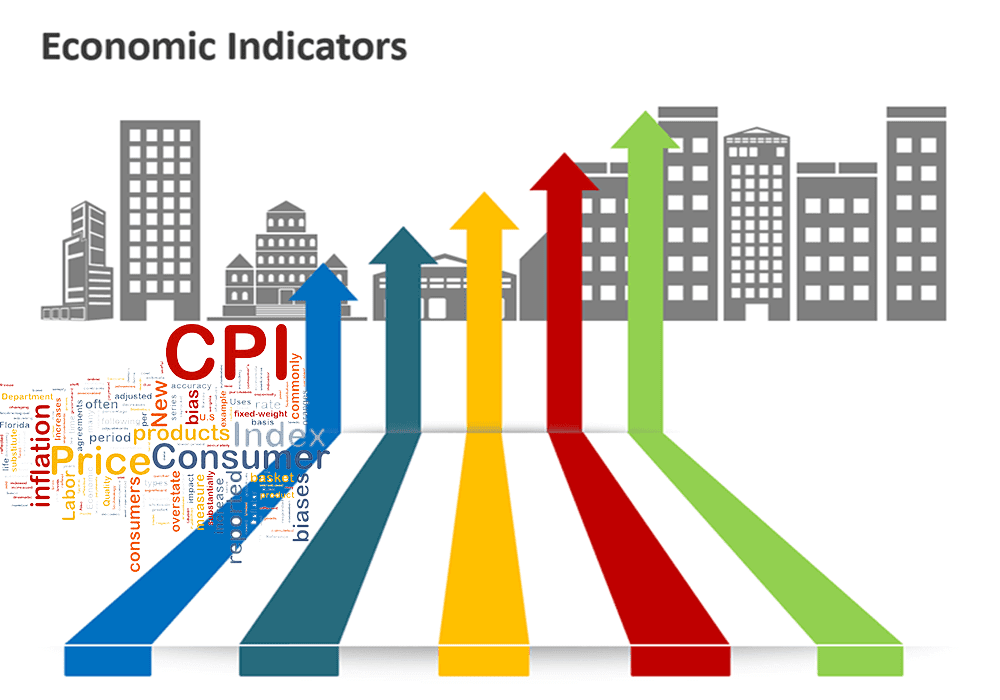
What are Economic Indicators and their Importance

What are Economic Indicators and their Importance


Economic indicators are key stats about the economy that can help you better understand where the economy is headed. These indicators can help investors decide when to buy or sell investments. For example, if the stock market is at its peak, you may want to sell. If the market is low and on the rise, you may want to buy. Economic indicators can help you understand the flow of market, as well as other important financial factors.

Types of Economic Indicators

Leading indicators:
Leading indicators signal future changes. That means, they usually change before the economy itself changes. This makes them extremely useful for short term predictions of economic developments. An example of a leading indicator is the stock market. Stock market returns usually start to decline, before the economy as a whole falls into a recession and vice versa.

Lagging Indicators:
Lagging indicators usually change after the economy as a whole changes. For that reason, they cannot directly be used to predict economic changes. They are more useful to confirm specific patterns (e.g. economic cycles) and make further predictions from there. Arguably the most popular example of a lagging indicator is unemployment. Unemployment usually starts to increase a few quarters after the economy has started to recover from a recession.

Coincident Indicators:
Coincident indicators occur at about the same time as the changes they signal. Therefore, they can provide valuable information about the current state of the economy. An example of a coincident indicator is personal income. If the economy is strong and business is going well, personal income rates will increase at about the same time. 

Attributes of Economic Indicators:
It may possess one of the three following attributes:

Pro cyclical:
It is an indicator that moves in a direction similar to the economy. For example, GDP is pro cyclical because it increases if the economy is performing well. If the economy is not doing well (i.e., recession), GDP decreases.

Counter cyclical:
It is an indicator that moves in the opposite direction of the economy. For example, the unemployment rate declines if the economy is thriving.

A cyclical:
It is an indicator that bears no relationship to the economy at all.


Few Important Economic Indicators:

Gross Domestic Product (GDP)
GDP is a lagging indicator. It is one of the first indicators used to gauge the health of an economy. It represents economic production and growth, or the size of the economy. 

An increase in GDP indicates that businesses are making more money. It also suggests an increase in the standard of living for people in that country. If GDP decreases, then it suggests the reverse.

Balance of Trade
Balance of trade is a lagging indicator. It’s the net difference between a country’s value of imports and exports, and shows whether there is a trade surplus or a trade deficit. A trade surplus is generally desirable, and shows that there is more money coming into the country than leaving. A trade deficit shows that there is more money leaving the country than coming in. Trade deficits can lead to significant domestic debt. In the long term, a trade deficit can result in a devaluation of the local currency, since it leads to significant debt. The increase in debt will reduce the credibility of the local currency. It could also lead to a major financial burden for future generations, since they will be forced to pay off that debt.

Inflation
Inflation measures the cost of goods and services. Inflation has a key effect on economies and markets. For economies, high inflation discourages savings and investment, leads to higher interest rates, and ultimately limits growth. In markets, higher inflation may initially lead to asset price increases, but ultimately investors will pay lower multiples and real wealth will decline. The key reports to focus on are the Producer Price Index (PPI) and Consumer Price Index (CPI). Use a moving average of the year-over-year change and watch for results that are negative (signaling deflation) or over four percent.

Housing  
In a land of increasing house prices, banks lend and the economy booms. However, the housing game has changed. We have lived through the housing collapse, we expect banks to become more prudent for many years. Weakness in housing will lead to a drop in lending and economic contraction. Many reports track housing. New home sales and existing home sales are the most popular. However, I prefer to look at housing starts and building permits. Permits are a leading indicator and offer an assessment of housing demand. When permits are rising, house prices should appreciate as well.

Spending 
We live in a consumption-based society. As consumers increase their expenditures, the economy grows. While many surveys attempt to capture people’s feelings about the state of the economy, behavior is what counts. Look to the monthly retail sales report for an indication of actual consumer activity.

Consumer Price Index (CPI)
CPI is a lagging indicator, and the U.S. relies on it heavily as one of the best indicators of inflation. This is because changes in inflation can spur the Federal Reserve to make changes to its monetary policy.

CPI measures changes in prices paid for goods and services by urban consumers for a specified month. It’s essentially a measure of the cost of living changes. It offers a gauge of inflation as it relates to purchasing those goods and services.

CPI takes a sampling of several hundred goods and services across 200 categories. CPI does not include Social Security taxes, income, or investments in stocks, bonds or life insurance. However, it does include all sales taxes associated with the purchase of those goods.

Producer Price Index (PPI)
PPI is a coincident indicator that tracks price changes in almost all goods-producing sectors, including mining, manufacturing, agriculture, forestry and fishing. PPI also tracks price changes for an increasing portion of the non-goods-producing sectors of the economy. The report measures prices for finished goods, intermediate goods and crude goods. Prices from thousands of establishments are tracked each month and are recorded on the U.S. Bureau of Labor Statistics website.

PPI is important because it’s the first inflation measure available in the month. It captures price movements on a wholesale level, before price changes show up on the retail level.

Interest Rates
Interest rates are a lagging indicator of economic growth. They are based around the federal funds rate, which is determined by the Federal Open Market Committee (FOMC). When the federal funds rate increases, interest rates increase. The federal funds rate increases or decreases as a result of economic and market events.

When interest rates increase, borrowers are more reluctant to take out loans. This discourages consumers from taking on debt and businesses from expanding, and as a result, GDP growth may become stagnant.

If interest rates are too low, that can lead to an increased demand for money and raise the likelihood of inflation. Raising inflation can distort the economy and the value of its currency. Current interest rates are indicative of the economy’s current condition, and can also suggest where the economy might be headed.

Currency Strength
Currency strength is a lagging indicator. When a country has a strong currency, its purchasing and selling power with other nations is increased. A country with a strong currency can import products at a cheaper rate and sell its products overseas at higher foreign prices. However, when a country has a weaker currency, it can draw in more tourists and encourage other countries to buy its goods since they are cheaper.

Manufacturing Activity
Manufacturing is a leading economic indicator. Durable goods orders are an indicator of manufacturing activity. The term “durable goods” refers to consumer products that usually aren’t replaced for at least a few years, such as refrigerators and cars. Near the end of each month, the Department of Commerce Census Bureau publishes its report on durable goods.

Durable goods orders are a measure of new orders manufacturers receive for those types of goods. An increase in durable goods orders is generally taken as a sign of economic health, while a decline might indicate trouble in the economy. Increases and decreases in durable goods orders may also be associated with increases and decreases in stock indices, respectively.

Income and Wages
Income and wages are a lagging indicator. When the economy is operating properly, earnings should increase to keep up with the average cost of living. However, when incomes decline relative to the average cost of living, it is a sign that employers are either laying off workers, cutting pay rates or reducing employee hours. Declining incomes can also indicate an environment where investments are not performing as well.

Incomes are broken down by different demographics, like age, gender, level of education and ethnicity. These demographics can give insight into how wages change for certain groups. A trend that may affect what seems to be only one smaller group may actually suggest an income problem for the entire country, rather than just the group it initially affects.

There’s no golden rule in investing, but considering these economic indicators one can help themself to make informed investment decisions. The Federal Reserve releases a report known as "the Beige Book" eight times per year. The Beige Book outlines the nation’s economic conditions and it can be a useful resource for investors, economists and analysts. Economic indicators are important to take into account before making any investment decisions. With a little research, you’ll be able to maximize

Disclaimer: The information provided herein is based on publicly available information and other sources believed to be reliable, but involve uncertainties that could cause actual events to differ materially from those expressed or implied in such statements. The document is given for general and information purpose and is neither an investment advice nor an offer to sell nor a solicitation. While due care has been exercised while preparing this document, we do not warrant the completeness or accuracy of the information. We will not accept any liability arising from the use of this material. The recipient of this material should rely on their investigations and take their own professional advice.

Follow, Like, subscribe and share

"Your Trust, Our Financial Expertise."

Infyture, Investment For Your Future

Email: infyture@gmail.com

Website: http://infyture.wordpress.com

Facebook Page: https://www.facebook.com/infyture4future/

Youtube:https://www.youtube.com/channel/UCjOxVGTKQiK5O0mdcuMBCdw?view_as=subscriber

Blogger: https://infyture.blogspot.com/

WhatsApp: https://wa.me/message/SXE3AQCBR3O4B1
Telegram:
https://t.me/infyture

Goal Based Planning || Equity Tip || Demat Account || Mutual Fund Investment || Life Insurance || General & Health Insurance || PMS & mini PMS || Retirement Planning || NPS Enrollment

Disable copy